Have you ever noticed how a tiny dent in your wall can suddenly become the only thing you see when you walk into a room?
We completely understand how frustrating it is when a patch job looks like a poorly hidden secret.
According to Angi’s 2026 data, the national average cost to repair drywall sits around $613.
This price reflects the skill required to make the damage completely invisible.
Our Round Rock team is going to walk you through the exact steps to achieve that flawless finish.
So, grab a cup of coffee, and let’s go through it together.
Drywall Repair That Disappears
A good patch truly disappears only when the texture and the paint match your existing wall perfectly.
We tackle everything from minor blemishes to significant structural wear across every neighborhood in Round Rock.
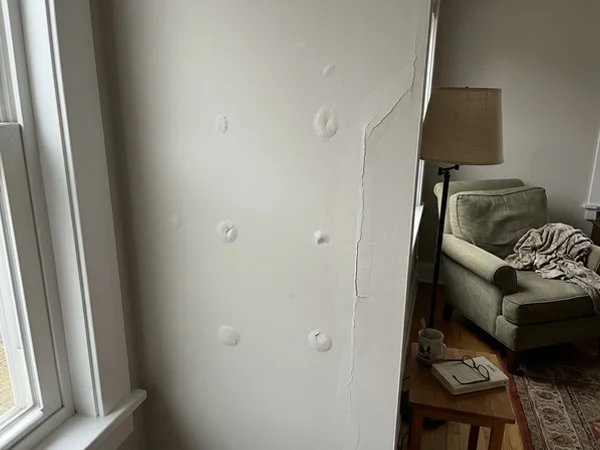
This includes fixing holes, tape-joint separations, corner cracks, nail pops and water-stained areas.
The goal is always to match your specific orange peel texture, knockdown texture or smooth finish before applying any primer.
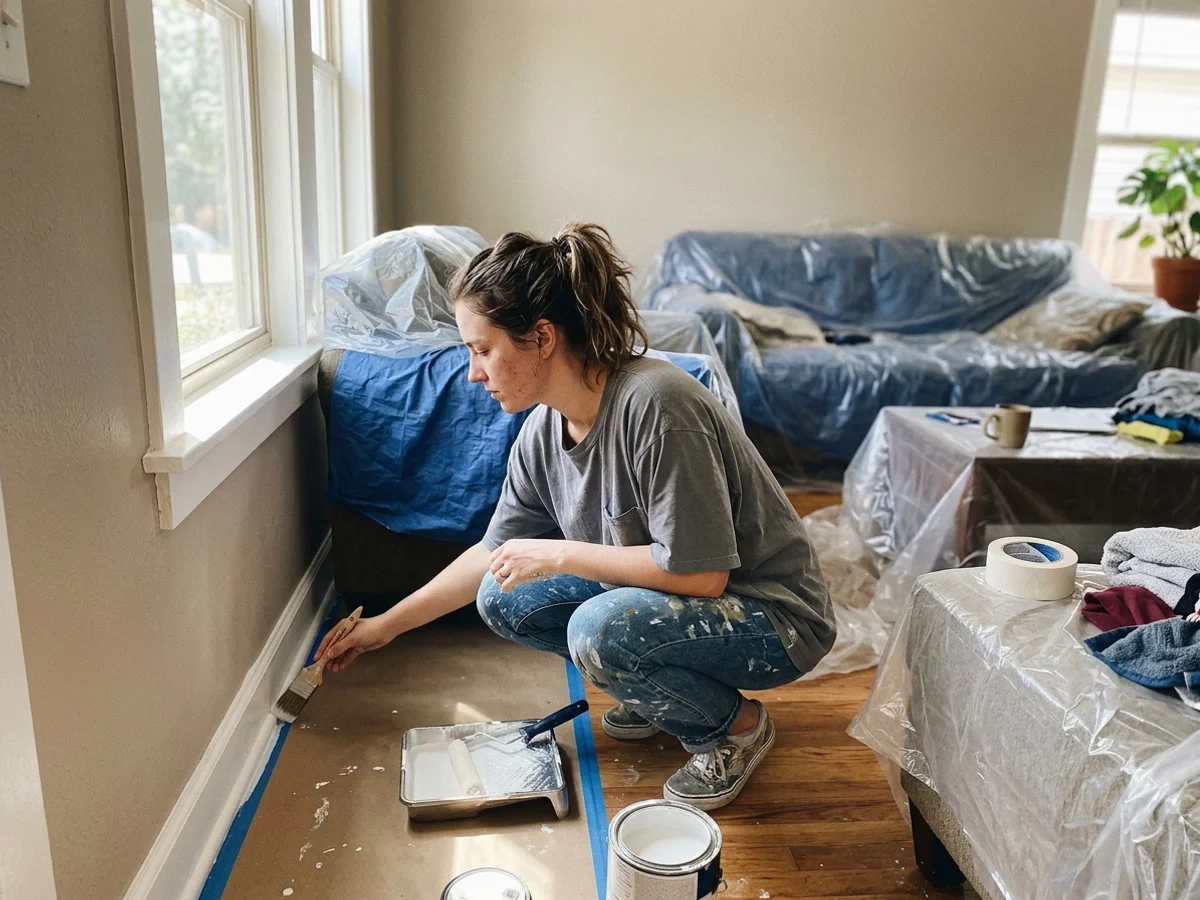
Our in-house crew handles both the repair and the paint, which means you never have to wait around for a second contractor.
If a crack looks like a sign of deeper structural movement, the technician will tell you before covering it up. This matters on Round Rock lots where expansive clay soil can keep opening the same joint if the underlying cause isn’t addressed.
Here are the most common visible issues that require a professional touch:
- Unsightly holes from doorknobs or furniture bumps.
- Flaking paint around old water leaks.
- Recurring diagonal cracks above door frames.
How We Repair Drywall
Every repair follows the same basic steps, adjusted for the size of the damage.
- Open and clean the damage. Loose paper and crumbled gypsum come out first. Water-damaged sections are cut back to solid board.
- Reinforce the structure. Cracks get 3M mesh tape and paper tape depending on the location. Inside corners usually take paper tape, while large holes get a completely new piece of half-inch USG SHEETROCK brand board.
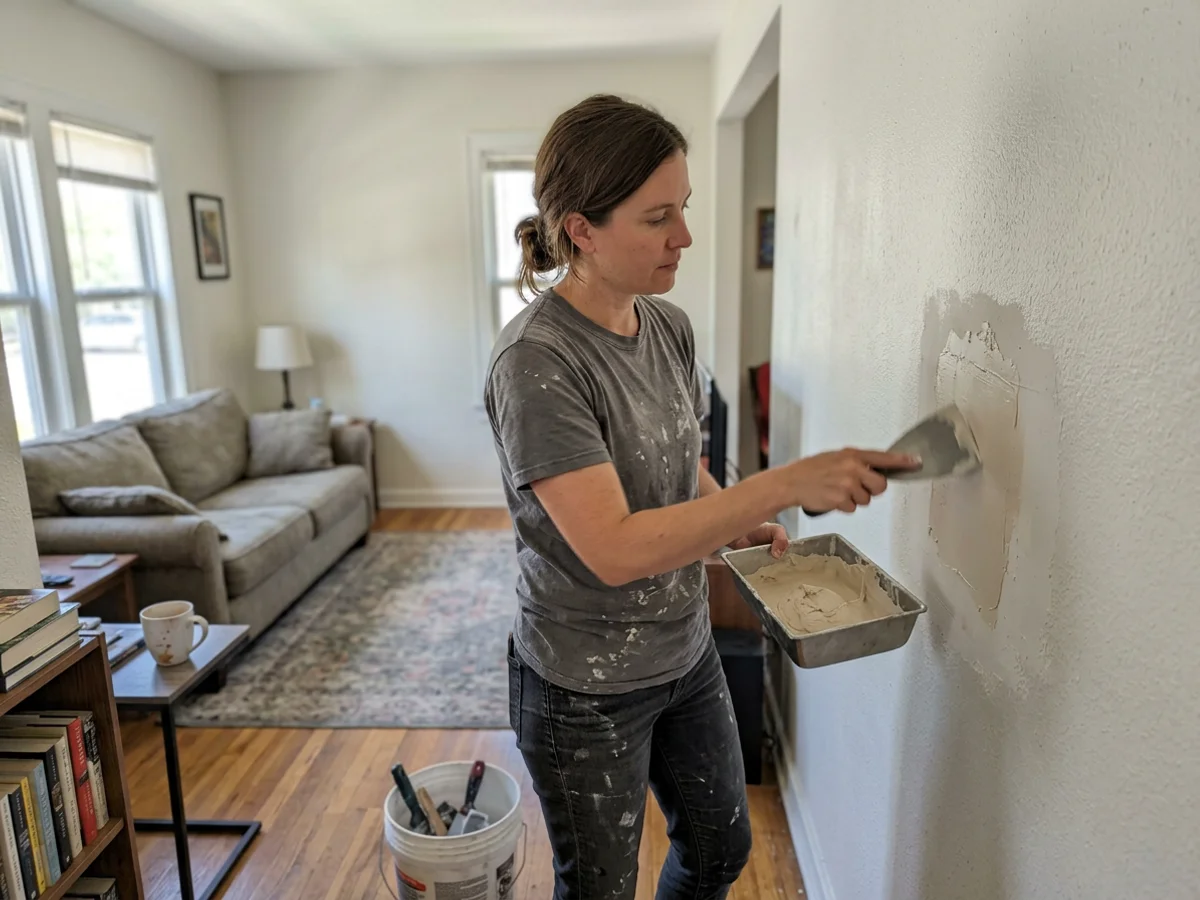
- Mud in thin coats. A lightweight joint compound like USG Plus3 goes on in several thin layers. We focus on feathering each coat wider than the last so there is no noticeable hump.
- Match the texture. Testing the pattern on a scrap board happens before anything touches your wall. This ensures the sprayed or hand-applied texture blends perfectly.
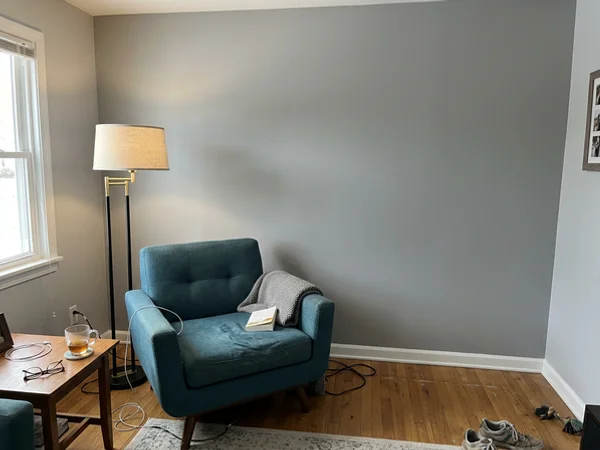
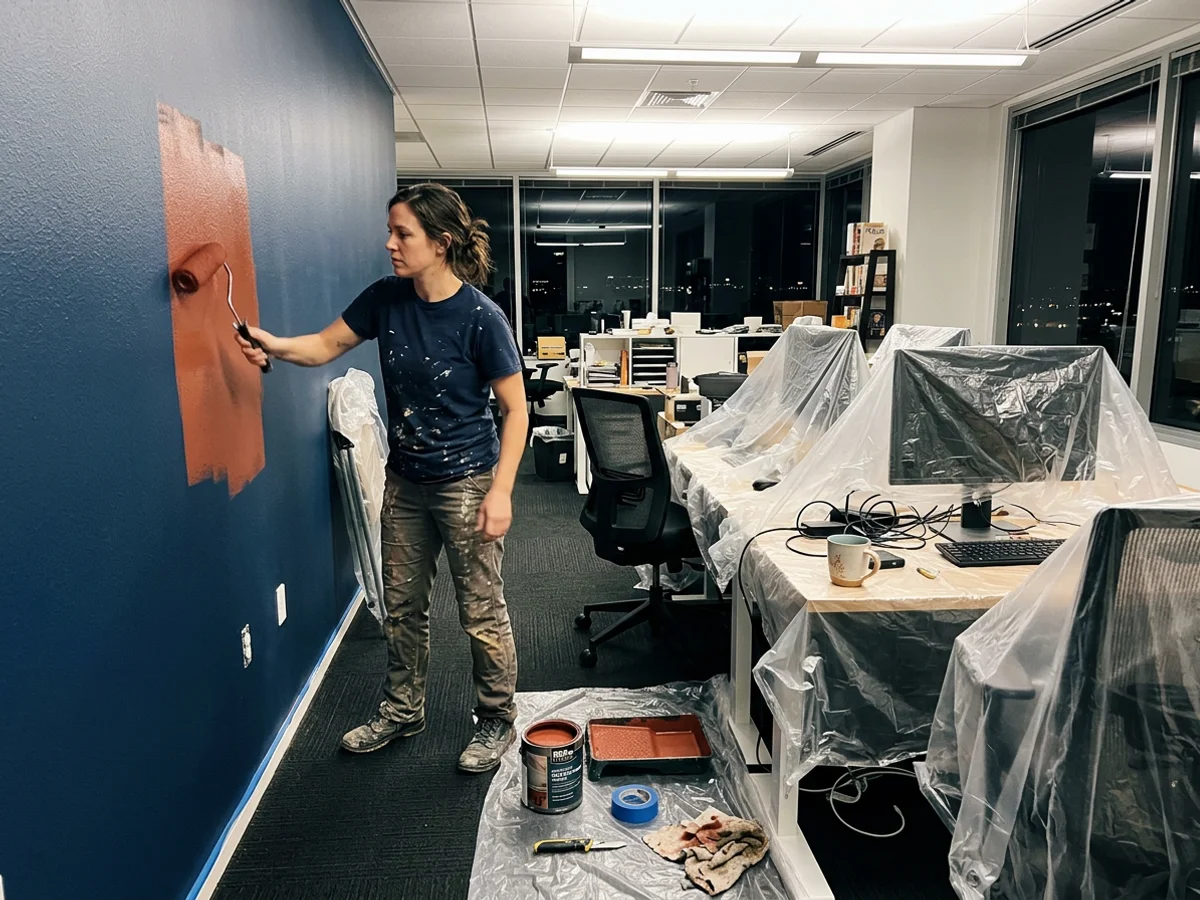
- Seal and paint. A high-quality PVA sealer keeps the patched area from flashing through the topcoat. The final step is painting the wall to match the room.
Achieving a flawless look on flat surfaces requires extra care.
We often skim coat a wider area to reach a premium Level 5 smooth finish, ensuring that harsh light does not reveal the repair.
Containing the mess is a top priority during this process.
Our equipment uses strict HEPA dust control vacuums that capture 99.97% of airborne particles.
This adherence to the 2026 OSHA silica standard keeps your indoor air clean and safe.
Common Problems We Solve
The soil beneath your Round Rock home plays a huge role in wall damage.
We see specific patterns depending on the age and neighborhood of the property.
A 2026 engineering report noted that over 60% of homes in the Greater Austin metro experience some degree of foundation movement, and Round Rock’s Blackland Prairie clay is one of the big reasons why.
Our experts know exactly what to look for when diagnosing these shifts.
Settlement cracks at doors and windows. Diagonal splits from corners are incredibly common across Round Rock, especially in Forest Creek, Brushy Creek and the older sections of town. The region’s expansive clay soil, specifically the Taylor Black Clay, swells with spring rain and shrinks hard during a 100-degree summer. Our detailed guide on why drywall cracks in Central Texas explains when a crack is purely cosmetic and when you should call a structural engineer.
Nail pops in newer homes. Framing lumber naturally dries out and shrinks over time. As the wood shifts, it pushes the fastener heads straight out of the wall. This is one of the top reasons Paloma Lake and Siena homeowners call us in their first few years in the house. We reset these protrusions with specialized screws and carefully feather the spot to hide the repair.
Doorknob and furniture holes. Fast-moving kids or heavy furniture can easily punch through standard half-inch boards. Our team patches, textures and paints the damaged section. Adding a rigid door stop is a great way to ensure this accident does not happen again.
Water-stained ceilings. Moisture damage often requires cutting out the compromised material. We seal any remaining stains with a premium stain-blocking primer like KILZ after the plumbing leak is fully fixed. Replacing soft, crumbled sections with fresh gypsum board prevents future mold growth.
Pro-Tip for Homeowners: Never paint directly over a brown water stain without applying a sealer first. The water ring will bleed through every single coat of standard acrylic paint.
Can My Texture Really Be Matched?
Many property owners worry that a repaired patch will stand out forever.
We regularly get asked if older wall patterns can be flawlessly duplicated.
The answer is usually a resounding yes.
Our finishing specialists are trained to replicate the most popular styles found across Central Texas.
Each pattern requires a specific technique and different tools to blend correctly.
We often use a Graco hopper gun to dial in the exact droplet size for the spray.
Smooth walls actually take the most effort, as they have no texture to hide tiny imperfections.
Our technicians might run a few test passes on a scrap board before they ever touch your wall.
| Feature | Orange Peel Texture | Knockdown Texture | Smooth Finish |
|---|---|---|---|
| Visual Appearance | Fine, uniform bumps like citrus skin. | Larger, flattened splotches. | Completely flat and clean. |
| Application Method | Sprayed only. | Sprayed, then flattened with a wide knife. | Skim-coated and sanded. |
| Average 2026 Material Cost | $1.25 to $1.95 per square foot. | $2.00+ per square foot. | Highest labor cost. |
| Hiding Imperfections | Good for minor dents. | Excellent for hiding larger flaws. | Shows every single flaw. |
Reading orange peel vs knockdown texture is a great way to identify the exact finish on your current walls.
Patch or Replace?
Deciding whether to fill a hole or swap out the entire panel comes down to the size and cause of the damage.
Small to medium holes patch exceptionally well.
We generally recommend a full replacement section for large holes, soft water-damaged boards or crumbling corners.
According to 2026 pricing data from Homewyse, a full-service patch up to one foot across averages between $297 and $472.
Our goal is to provide a smart, long-lasting fix for your specific Round Rock situation.
See drywall patch vs panel replacement for a detailed breakdown of how that decision is made.
You can book a free estimate today within 24 hours anywhere in Williamson County, and the team will quote the repair, texture and paint together.