
Round Rock Sun Is Tough on Paint
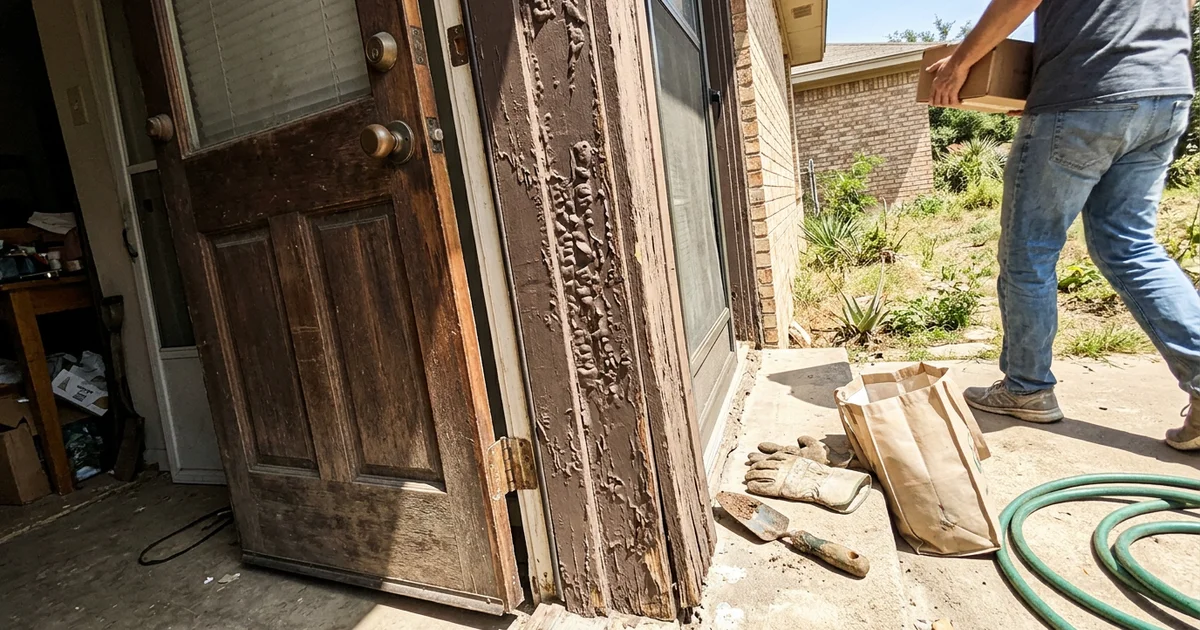
Our team regularly inspects failing exterior walls across Round Rock. Premature fading and blistering usually point back to climate factors rather than a bad batch of product.
Round Rock summers deal out an average UV index of 10.9 in June and July. July and August highs regularly exceed 96 degrees. A standard coating simply cannot survive that daily punishment.
Learn the mechanisms behind failures so you can select heat-ready exterior painting that actually lasts.
Failure 1: UV Breakdown and Chalking
Paint relies on a chemical binder to hold pigments against your Round Rock siding. UV radiation acts like a microscopic knife slicing through those bonds. The pigment comes loose as a fine white powder (chalking).
Wipe a bare hand firmly across a sun-exposed Round Rock wall. A dusty palm means your protective clear coat is failing.
Why Chalking Causes Future Failures
If new material goes directly over chalky dust, it only adheres to the loose powder instead of the wall. The entire new layer peels in heavy sheets within months. Power washing and specialized bonding primers remain essential.
Failure 2: Fading
Bright reds, deep blues and dark grays absorb significantly more Round Rock solar energy. Fading signals that the protective film is thinning.
Best Colors for High Round Rock UV Exposure
Check Light Reflectance Value (LRV) before choosing a color. The LRV scale runs 0 to 100.
- Colors with low LRV (under 30): Absorb more heat and fade faster.
- Colors with high LRV (above 60): Reflect heat and preserve the binder.
- Mid-range neutrals (30 to 60): Balance of style and longevity.
Failure 3: Blistering on Dark Colors
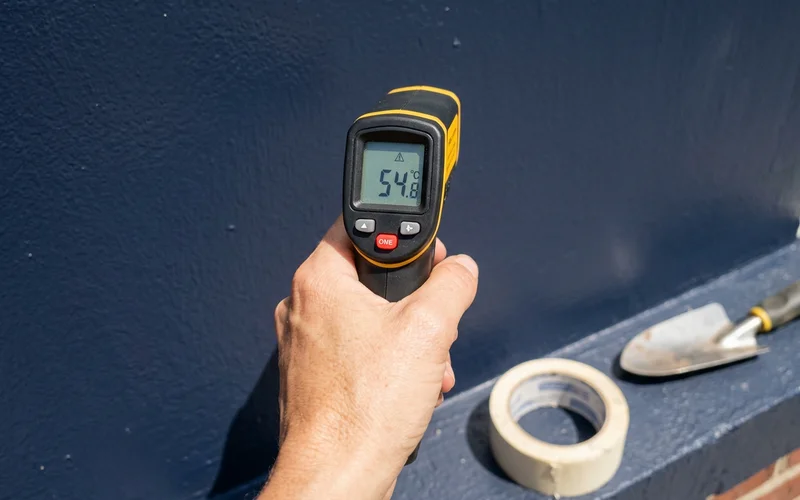
A dark Round Rock wall or door can reach extreme surface temperatures during a 100-degree afternoon. Testing shows these dark surfaces hit 160 degrees or higher in direct sunlight.
- Trapped moisture vaporizes. Heat turns hidden water from failed caulk into expanding vapor that pushes outward into blisters.
- Flash drying ruins adhesion. Paint applied to hot Round Rock siding dries into a solid skin before the bottom layers bond.
- Thermal stress creates micro-cracks. Daily extreme Round Rock temperature swings force the material to expand and contract.
Failure 4: Cracking From Movement
Round Rock wood siding and trim expand heavily during the heat of the day and shrink at night. This aggressive thermal cycle hits almost daily for six solid months.
Round Rock Stucco and Soil Challenges
Round Rock’s Blackland clay soils shift dramatically between droughts and heavy rainstorms. This causes stucco on Siena and Behrens Ranch homes to develop hairline cracks. Low-grade paint lacks the elasticity to bridge these gaps.
Why Application Temperature Matters in Round Rock
Most premium products require surface temperatures below 95 degrees during application. A west-facing Round Rock wall in July sun easily exceeds that limit by mid-afternoon.
Applying to scorching surfaces causes:
- Poor leveling: Instant drying leaves permanent lap marks.
- Weak adhesion: Solvents evaporate too fast.
- Future blistering: Weak initial bond guarantees peeling the next summer.
Strategic Round Rock Scheduling
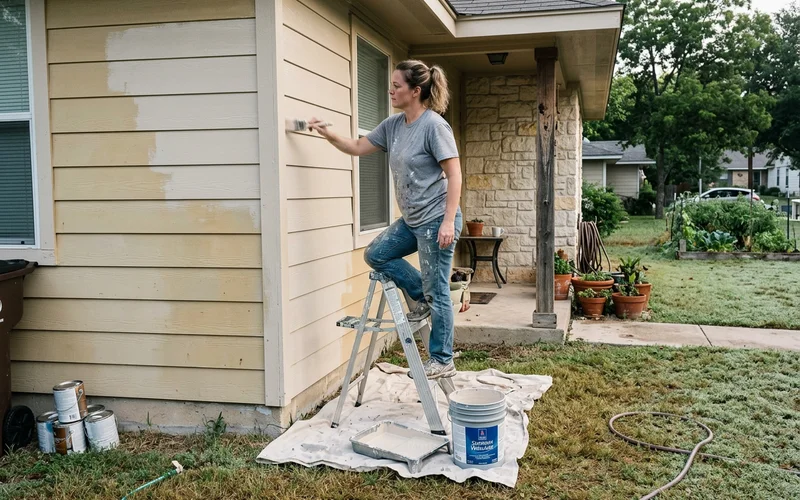
Our crews start early morning and verify surface temperatures with infrared thermometers before applying a single drop. We follow the shade around the Round Rock property.
What Lasts Longer in Round Rock
Premium 100% acrylic paint uses advanced resins that maintain flexibility under thermal stress. Sherwin-Williams Duration or Benjamin Moore Aura outlast budget options by two to three times in Round Rock.
Round Rock Stucco and Elastomeric Solutions
Elastomeric coatings apply up to ten times thicker than standard acrylics. They easily stretch to conceal shifting hairline cracks common on Round Rock stucco. See elastomeric coatings.
Preparation and Smart Design
| Material or Strategy | Long-Term Effect in Round Rock Sun |
|---|---|
| Light body color | Less heat buildup, slower fading |
| Dark body color on west wall | More heat, more fading, blister risk |
| Premium 100% acrylic | Better UV resistance and flexibility |
| Economy paint | Faster chalking and color loss |
| Painting in shade | Better bond, smoother finish |
| Painting in direct afternoon sun | Lap marks, weak bond, blister risk |
Moisture Makes Heat Problems Worse in Round Rock
Round Rock humidity peaks around 75 percent in summer. Combining extreme heat with trapped moisture triggers catastrophic peeling and bubbling.
Common Sources of Round Rock Water Damage
- Improperly aimed sprinklers: Common on tight Teravista lots.
- Cracked window caulking: Hardened seals let rain seep behind trim.
- Clogged gutter systems: Overflow saturates Round Rock siding.
- High interior humidity: Bathrooms and kitchens without ventilation.
We inspect gutters, trim joints and irrigation during every Round Rock quote.
What You Can Do Between Round Rock Paint Jobs
- Rinse the siding annually with a low-pressure garden hose.
- Redirect sprinkler heads away from the foundation.
- Clear seasonal debris from gutters before Round Rock spring rains.
- Seal minor gaps with fresh caulk before moisture gets inside.
- Prune dense Round Rock landscaping back from walls for airflow.
Questions to Ask Round Rock Contractors About Products
Ask the contractor to name the specific product line and confirm it’s a 100% acrylic resin formula.
Checking Round Rock Temperature Protocols
Ask how the crew manages Round Rock summer heat. Professional teams monitor surface temperatures and may use Benjamin Moore Paint Extender to slow drying on hot days.
How Bluebonnet Ridge Painting Round Rock Paints for Round Rock Conditions
Our Round Rock crew builds every exterior job on washing, scraping, caulking and spot-priming. We select heavy-duty 100% acrylic or elastomeric finishes matched to your Round Rock materials. Our painters follow the shade.
If your current Round Rock finish failed too early, we’ll identify the root cause during our walkthrough. Call (512) 555-0163 or email demo@locuspilot.com to schedule a detailed estimate within 24 hours anywhere in Williamson County.