
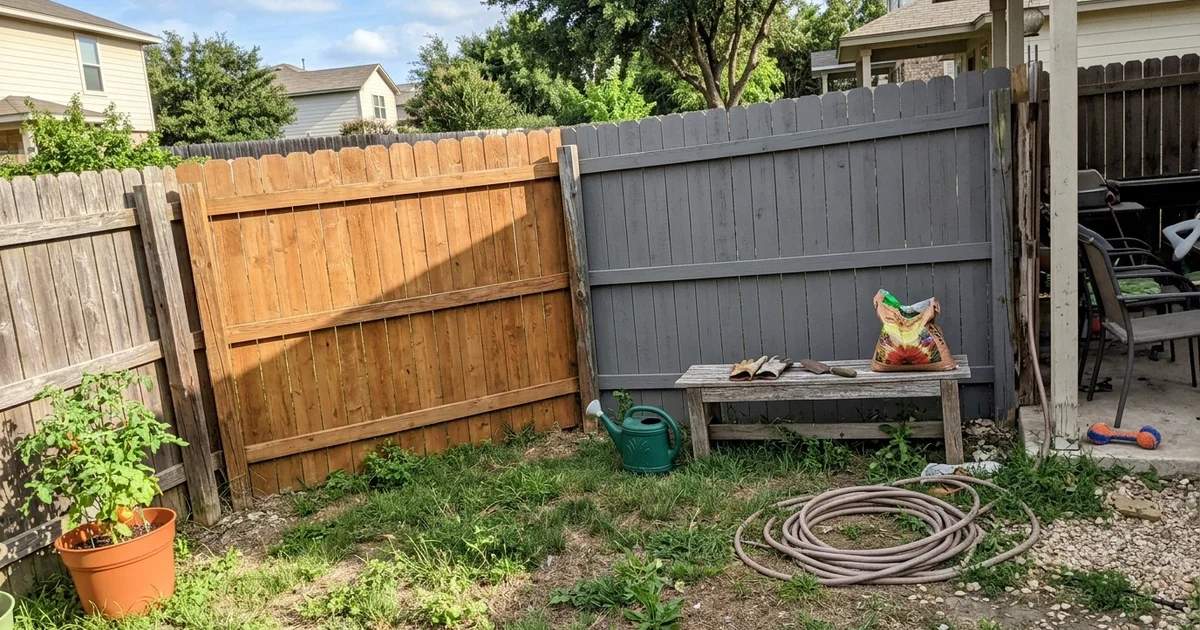
Two Very Different Looks for Round Rock Yards
Round Rock exterior wood projects fail when the wrong finish is applied. Opacity dictates far more than the final color.
The choice between semi-transparent and solid dictates your maintenance schedule for the next five to ten years in Williamson County. For how our team handles this, see deck and fence staining.
Semi-Transparent Stain
Semi-transparent stain contains a light amount of pigment that soaks directly into the wood fibers. You still see the grain and natural variation.
We often apply oil-based options like Ready Seal because they allow the wood to breathe, which matters in Round Rock humidity. A standard application lasts two to three years on horizontal decks and up to five years on vertical fences.
Pros
- Shows off wood grain, especially cedar
- Fades gradually instead of peeling
- Easy to recoat without stripping
- Good UV protection with the right product
Cons
- Doesn’t hide weathered, gray or mismatched boards
- Needs recoating more often on decks
Solid Stain
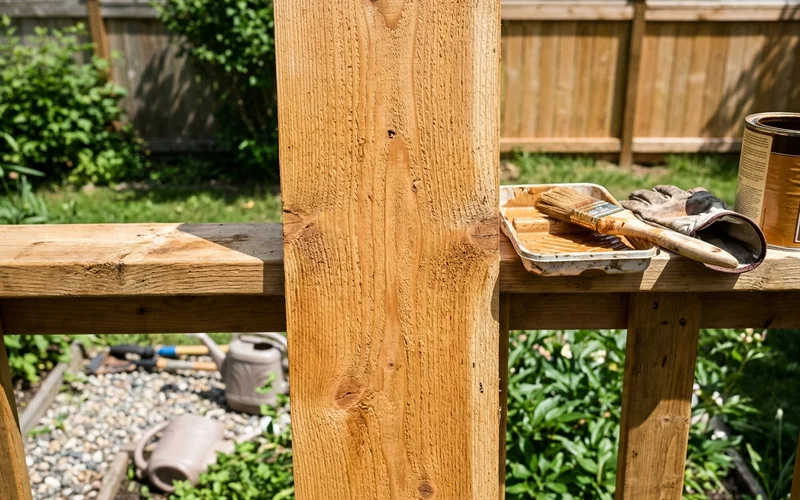
Solid stain is heavily pigmented and behaves like thin paint. It covers the wood grain while still allowing underlying texture to show through. Titanium dioxide blocks harsh UV rays.
Sherwin-Williams SuperDeck or Benjamin Moore Arborcoat last five to ten years on vertical Round Rock fencing. These premium acrylic products retail $50 to $65 per gallon in 2026.
Pros
- Hides weathered, gray or patched wood
- Evens out mismatched boards
- Lasts longer on vertical surfaces
- Wide range of colors, including grays and modern tones
Cons
- Can peel on horizontal Round Rock deck boards
- Hard to reverse once applied
- Hides natural wood beauty
Durability on Horizontal Surfaces
Solid stain forms a film that takes direct abuse from foot traffic, standing water and intense Round Rock sun. Over time, the film wears through in high-traffic spots and cracks in others.
A failing solid stain cannot simply be painted over; you must completely remove it to ensure the new coat adheres to bare wood.
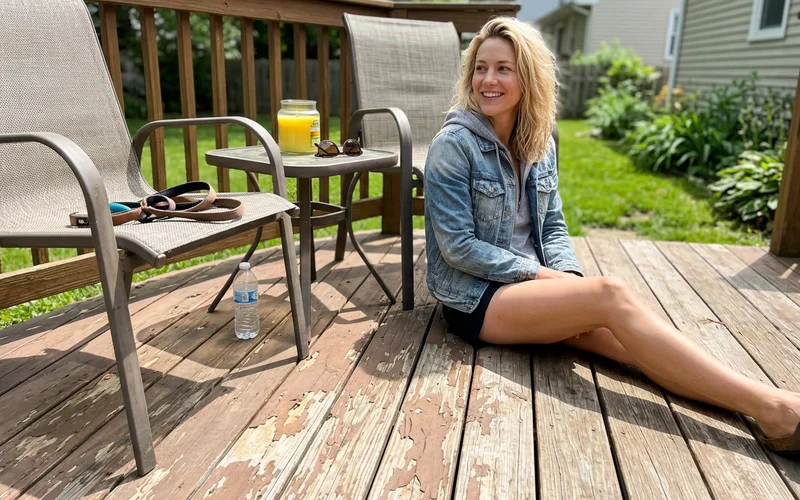
Semi-transparent stain simply soaks in and wears away gradually. Our Round Rock crews prefer semi-transparent for horizontal surfaces.
Side-by-Side Comparison
| Feature | Semi-transparent | Solid |
|---|---|---|
| Grain visibility | Yes | Mostly hidden |
| Hides weathered wood | No | Yes |
| Expected lifespan (Fence) | 3 to 5 years | 5 to 10 years |
| Expected lifespan (Deck) | 2 to 3 years | 3 to 5 years (with peeling risk) |
| Recoating | Easy | Easy if same type |
| Switching later | Can go to solid | Must strip to go back |
| Best for | Newer or good-condition wood, decks | Older fences, mismatched boards |
Switching From One to the Other
- Semi-transparent to solid: Straightforward. Clean the wood with a specialized cleaner and apply the solid stain.
- Solid to semi-transparent: Chemically break down the solid film using a dedicated deck stain remover, followed by an acidic wood brightener.
Most Round Rock property owners who switch to opaque stay with it permanently. If unable to decide, always start with semi-transparent.
A Third Option for Round Rock Decks
For horizontal decking, a true penetrating oil-based stain provides a highly durable alternative. We prefer applying penetrating oils like Cabot Australian Timber Oil on Round Rock custom decks because the finish fades slowly instead of flaking.
Regular recoating every two years, with zero sanding required.
Our Usual Round Rock Recommendations
- New cedar fence: Semi-transparent to highlight the natural grain.
- New pressure-treated pine fence: Allow three months to weather in Round Rock sun, then apply semi-transparent or solid.
- Older, gray or patched fence: Solid stain to mask imperfections.
- Deck floor: Semi-transparent or penetrating oil to prevent peeling.
- Deck railings: Either option works, often matched to the fence.
Cost Differences
A gallon of premium penetrating oil costs around $45. High-end solid acrylics exceed $60 per gallon. The real cost is prep hours, not the stain itself.
See fence staining cost for the full Round Rock financial picture.
Color Choices for Round Rock Yards
Semi-transparent stays within the natural wood spectrum (cedar, redwood, honey, light brown). Solid provides a broader palette including stark grays and deep blues.
Popular 2026 Round Rock solid choices: slate gray and rich russet brown. Consider:
- Architecture matching: Complement your trim and roof color.
- Heat retention: Darker solid grays absorb more Round Rock sunlight and make decks physically hotter.
- Neighborhood rules: Verify the approved color list with your Teravista, Siena or Paloma Lake HOA before purchasing.
How Many Coats?
Semi-transparent is typically a single even layer, 150 to 250 square feet per gallon. We back-brush to push oils deep. Solid stains require two full coats for rated durability and UV protection.
Maintenance Over Time
- Semi-transparent: Clean with a mild brightener and recoat every two to three years.
- Solid: Wash annually and apply a fresh coat when pigment fades. Peeling requires scraping and sanding.
- Penetrating oil on decks: Light maintenance coat every 24 months.
What About Clear Sealers?
Clear water sealers contain no pigment, so they offer zero UV protection. Wood treated with clear sealers turns gray within six to twelve months under the intense Round Rock sun. Semi-transparent with trans-oxide pigments provides much better defense.
Fences in Round Rock HOA Communities
Texas SB 1588 and SB 711 limit HOA restrictions on building a fence, but associations retain the right to regulate appearance. Teravista and Siena require specific stain colors. Include in your ACC submission:
- Exact brand name of the coating
- Specific color code or name
- A physical color swatch
- Your contractor’s written estimate
Not Sure Which to Pick for Your Round Rock Yard?
Our Bluebonnet Ridge Painting Round Rock team evaluates the age of your lumber, assesses previous coating and discusses long-term goals. We bring physical sample boards so you can see pigments in actual Round Rock sunlight.
Call (512) 555-0163 or email demo@locuspilot.com to set up your site visit within 24 hours anywhere in Williamson County.