
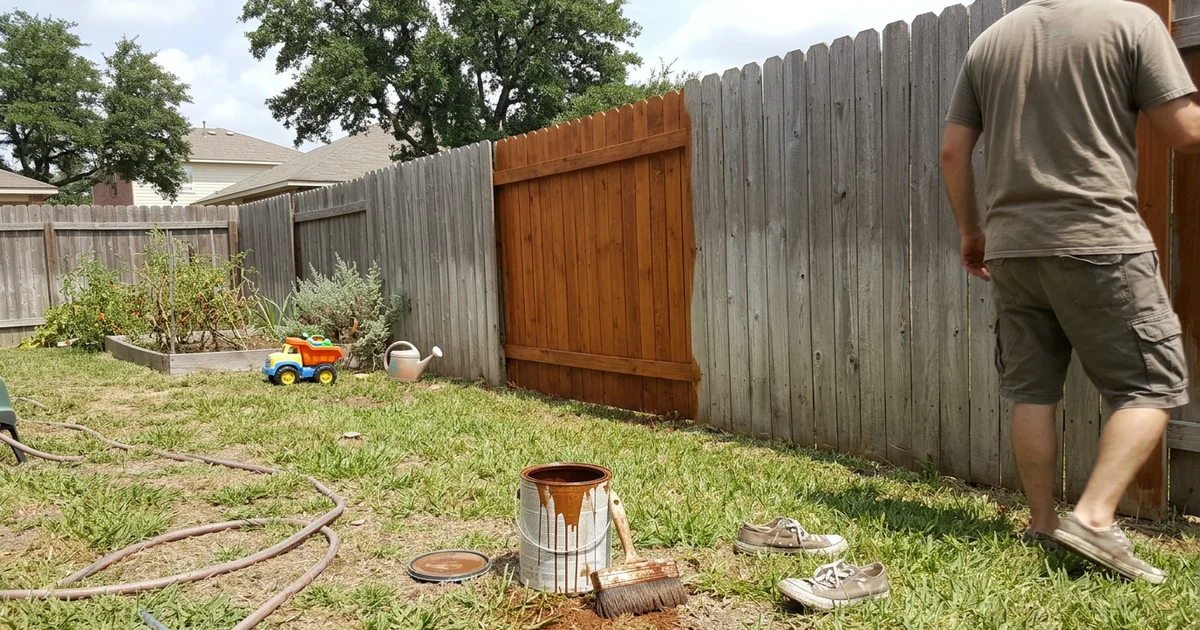
The Short Answer for Round Rock
Most Round Rock fences require a fresh coat every two to four years, while horizontal deck surfaces typically need attention every one to three years.
The Round Rock sun pushes the UV index above 11 during summer, which rapidly destroys unprotected wood fibers. See our deck and fence staining page for how we handle these projects.
Typical Re-Stain Intervals in Round Rock
South and west-facing installations absorb the brunt of the afternoon sun. Premium penetrating oils like TWP 1500 Series might buy you an extra season, but the Round Rock environment always dictates the final timeline.
| Surface and stain | Typical interval in Round Rock sun |
|---|---|
| Fence, semi-transparent stain | About 2 to 4 years |
| Fence, solid stain | About 4 to 6 years |
| Deck floor, semi-transparent stain | About 1 to 3 years |
| Deck floor, solid stain | About 2 to 4 years, with peeling risk |
| Deck railings and vertical parts | Similar to fences |
Shaded areas, like fences backing to mature live oaks in Forest Creek or Brushy Creek, can last twice as long as fully exposed sections in Teravista or Paloma Lake.
Why Decks Wear Faster Than Fences
Round Rock decks wear down up to twice as fast as fences because flat horizontal surfaces take direct abuse. Standing water gets trapped in the wood grain during spring rainstorms and boils off in the 100-plus-degree afternoon heat.
- Direct overhead sun baking the boards for eight to ten hours straight.
- Standing water pooling under heavy patio furniture.
- Constant physical friction from shoes, pets and chairs.
- Accumulated organic debris like wet oak leaves accelerating rot.
The Water-Beading Test
A simple water beading test takes less than a minute and reveals whether moisture stays on the surface or absorbs into the grain. Perform it every Round Rock spring before the intense heat arrives.
- Sprinkle clean water across a few different sections, focusing on the sunniest areas.
- Watch the surface closely for about sixty seconds.
- If water beads up, the seal is still working.
- If water soaks in and the wood darkens, the seal has failed.
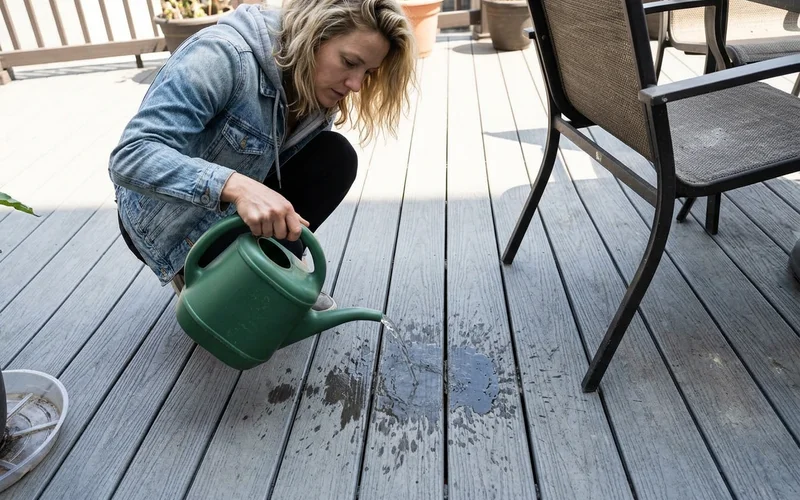
Check multiple sections. The sunny side of a Round Rock structure almost always fails first.
Warning Signs
Besides a failed water test, watch for:
- Graying. Round Rock UV radiation breaks down the lignin in cedar and pine, turning the top layer silver-gray.
- Fading color. Pigment looks washed out, uneven or blotchy.
- Checking and splitting. Micro-cracks appear as the timber expands and contracts between hot summer days and cool nights.
- Peeling. Topcoat flakes off in sheets, very common with heavily pigmented acrylic products.
- Mildew or dark spots. Fungal growth in damp, shaded Round Rock corners.
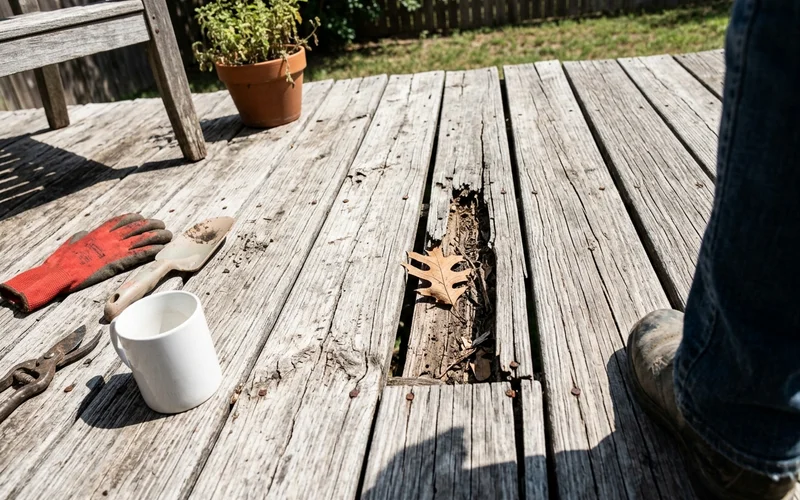
Excessive graying is a red flag. Wood fibers lose their structural integrity once they reach this stage.
Stain Type Affects the Schedule
We strongly prefer high-quality penetrating formulas with deep-conditioning linseed oil for Round Rock deck surfaces. These products soak deep into the cellular structure.
A semi-transparent product slowly fades away over time rather than cracking. Solid products containing titanium dioxide provide maximum UV reflection and last longer on vertical pickets, but can peel on horizontal floorboards. See choosing a stain type for the full comparison.
Don’t Wait Too Long
A professional Round Rock fence refresh costs roughly $3.50 to $7 per linear foot in 2026. A complete composite deck replacement averages $9,000 to $18,000.
Routine upkeep involves a basic wash and a single application of fresh pigment. Severely neglected timber requires chemical stripping, mechanical sanding and professional acid brightening.
Make It Last Longer in Round Rock
- Keep sprinklers off fences and decks. Common on corner lots in Teravista and Paloma Lake.
- Sweep decks so wet oak leaves don’t sit on flat boards.
- Trim plants at least twelve inches away from vertical pickets.
- Avoid harsh chlorine cleaners.
- Do the water test once a year in early spring before Round Rock summer arrives.
Shade vs Full Sun
Two sides of the same Round Rock property will demand different maintenance strategies. South-exposed sections blister while north-facing sides grow algae under mature trees. Shaded timber needs aggressive chemical cleaning to kill mold spores. Sun-baked areas need careful sanding to smooth out raised grain.
Combining Staining With Other Work
Scheduling your Round Rock wood maintenance alongside exterior painting saves money through consolidated labor. Plan these renovations during the milder months (October or March) when temperatures sit between 60 and 80 degrees.
- Exterior repaint, so the main building and the fence look fresh simultaneously.
- Fence repairs, right before the application so new lumber gets immediate protection.
- Seasonal timing, matching the ideal spring and fall curing conditions.
- Gutter cleaning, removing overflow risks.
What a Re-Stain Includes
A professional Round Rock service involves deep chemical cleaning, pH neutralizing with oxalic acid brightener and spray application followed by physical back-brushing to force oils deep into the grain.
Fences vs Decks: A Round Rock Example
A cedar fence and pine deck installed on the same day age very differently. After 24 months in Round Rock, the shaded side of the fence usually repels water perfectly, while the western exposure begins to show stress. The deck boards near patio doors soak up moisture immediately, forming gray patches that signal failing protection.
Plan Your Next Round Rock Coat
Take a walk around your Round Rock yard today and sprinkle water on your most exposed wood. Fading color and graying fibers mean your protection is gone.
Call Bluebonnet Ridge Painting Round Rock at (512) 555-0163 or email demo@locuspilot.com to schedule your on-site inspection within 24 hours anywhere in Williamson County.